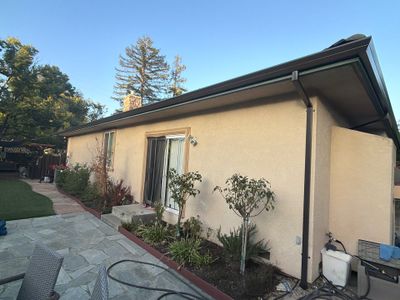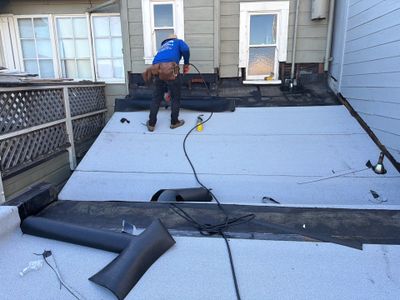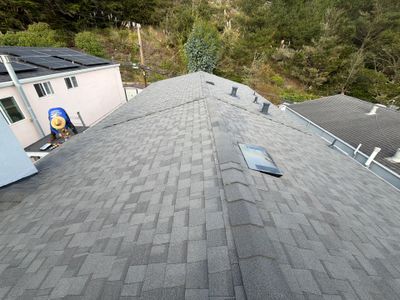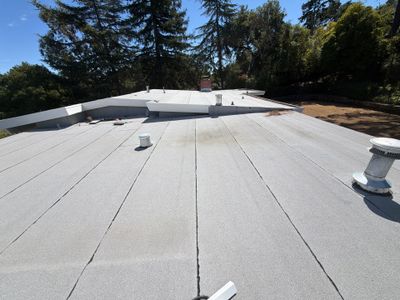
Roofing an occupied apartment building or an HOA property is as much about planning and paperwork as roofing: a written scope the owner or board can compare line by line, a schedule tenants can live with, a roof that is watertight every night, and a photo record for the file. Alpha Eagle Roofing repairs and replaces flat and pitched roofs on multi-unit buildings in Oakland, San Francisco and across the East Bay and Peninsula, pulls the permits, and works with property managers and HOA boards from inspection to final sign-off.
Who this service is for
- Property managers and owners of apartment buildings, from small multi-unit buildings to larger complexes.
- HOA boards and community managers for condominiums and townhome associations.
- Owners of mixed-use buildings with apartments over ground-floor shops.
- Owners preparing a building for sale or refinancing who need a roof that passes inspection.
Signs the roof needs attention
Top-floor units reporting leaks
Especially stains near exterior walls, parapets, skylights or rooftop equipment.
Ponding that stays days after rain
Standing water on a flat roof wears out membranes and seams and points to drainage problems.
Blisters, splits or open seams
Common on aging modified bitumen, built-up and older single-ply roofs.
Parapet and coping trouble
Cracked stucco, loose coping or stains on the wall below the parapet.
Clogged drains and scuppers
Overflow scuppers running in normal rain, or debris around the drains.
A reserve study or inspection flag
The roof shows up as near the end of its life in a reserve study, an insurance inspection or a lender's report.
How we work with managers and boards
- Walk the roof with you We meet the manager or a board member, check roof access, review the leak history, and note which units are affected.
- Inspect and document Membrane, seams, flashing, drains, parapets, rooftop equipment and the roof edge, photographed. Where the layers or insulation underneath matter, we make a small test opening and patch it.
- Written scope with options An itemized, written scope: repair now, partial work, or full replacement, so the owner or board can compare options and other bids line by line.
- Approvals, insurance and permit We provide certificates of insurance, answer the board's questions, and pull the permit once the work is approved.
- Tenant plan Dates, working hours, staging, parking and any areas that will be off-limits, in writing, so you can notify residents.
- Work in sections The roof is opened only as far as we can close in the same day. The building is watertight every night.
- Close-out package Final inspection, before and after photos, and warranty paperwork for your records and the board's files.
Built for property managers and HOA boards
Boards and managers need more than a price. They need something they can approve, file and defend.
Written scopes you can compare
Line items for tear-off, deck repair, insulation, membrane, flashing, drains and parapets, so you can compare our bid with others on the same scope.
Documentation for reserve planning
Photos and written condition notes on the roof's current state help your reserve specialist and the board plan. We are a roofing contractor, not a reserve study firm, and our notes are written to support their work.
Certificates of insurance
We are bonded and insured, and provide certificates of insurance on request. Tell us your requirements up front and we will confirm what our policy provides.
One point of contact
One person who knows the building, the schedule and the open questions, from estimate to close-out.
Photo records for the file
Every job is documented in CompanyCam before, during and after, including the work that ends up hidden under the new roof.
Working on occupied buildings
Residents stay home while we work. The job is planned around that.
Notices and access
Roofing work usually happens outside the units. If we need to enter a unit to trace a leak, we coordinate with you so you can give tenants the written notice California law requires.
Watertight every night
We open only what we can dry-in the same day, and we watch the forecast. No building is left open overnight.
Staging and parking
Debris bins, deliveries and hoisting planned with you, so entrances, driveways and parking stay usable. In San Francisco, equipment in the street may need a separate city permit, which we build into the schedule.
Fire safety on the roof
On occupied buildings we often recommend systems installed without open flame, like heat-welded TPO or self-adhered membranes. Where torch-applied membrane is the right choice, it is done with a fire watch and an extinguisher on the roof.
Rooftop equipment
HVAC units, vents, satellite dishes and solar have to be lifted, flashed or coordinated with their owners. We plan that with you before the job starts.
Low-slope roofs on Bay Area multi-unit buildings
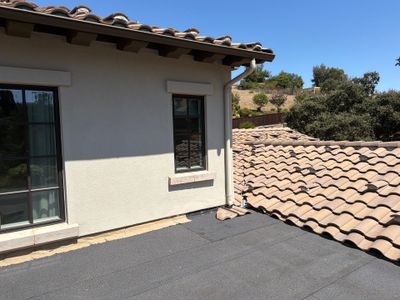
Many apartment and condo buildings in Oakland, San Francisco and the East Bay have flat or low-slope roofs behind parapet walls.
TPO
A white single-ply membrane with heat-welded seams. Reflective, which helps meet cool-roof requirements, and installed without open flame.
Modified bitumen
Torch-applied or self-adhered sheets in layers. Tough and repairable, common on older buildings.
Built-up (tar and gravel)
Found on many older buildings. When it fails across the roof, replacement with a modern system is usually the better answer than patching.
Drainage
Drains, scuppers and the slope toward them decide how long a flat roof lasts. Where ponding is chronic, adding slope with crickets or tapered insulation during replacement can fix it.
Parapets and edges
Parapet walls, coping and the membrane turned up the wall are some of the most common leak points on multi-unit buildings.
Title 24 cool roofs
California's energy code requires cool-roof products on many low-slope reroofs, depending on climate zone and building type. We confirm what applies and specify a compliant system.
Apartment and multi-family roofing in Oakland
Oakland has a large stock of older multi-unit buildings, from walk-up apartment buildings with flat roofs behind parapets to older houses converted into several units.
Older flat-roof buildings
Around Lake Merritt and across the flatlands, many older apartment buildings have flat roofs behind parapets, drained by interior drains or scuppers. When a roof like that has been patched repeatedly, we tell you honestly whether another repair will hold or whether it is time to replace.
Hills and wind
Multi-unit buildings in the Oakland hills deal with more wind, tree debris and fire-zone rules. In designated Fire Hazard Severity Zones, a Class A fire-rated roof assembly is required.
Permits
Most Bay Area cities require a building permit for reroofing. We pull it, schedule the inspections and close it out.
Local roofing in Oakland
More on the city, its neighborhoods and its housing stock on our Oakland roofing page, and commercial and multi-family specifics on commercial and residential roofing in Oakland.
San Francisco and the rest of the Bay Area
The same approach applies to multi-unit buildings across our six-county service area.
San Francisco flats and apartments
Victorian and Edwardian buildings converted to flats, and mid-century apartment buildings, often with flat roofs behind parapets, tight access and no room for a debris bin on the lot.
East Bay and Peninsula condos
Townhome and condo associations with pitched shingle or tile roofs over many units, where the board needs a phased plan and clear records.
Small buildings too
Duplexes and small multi-unit buildings get the same written scope, permit and photo record as a large complex.
Roof systems for multi-unit buildings
TPO single-ply
Pros
- Heat-welded seams, no open flame
- White surface meets many cool-roof requirements
- Good fit for large flat roofs
Cons
- Seams and edges must be detailed well
- Needs walk pads where people and equipment cross it
Modified bitumen
Pros
- Tough, multi-layer system
- Repairable with compatible material
- Self-adhered versions avoid the torch
Cons
- Torch-applied versions need strict fire precautions on occupied buildings
- Dark surfaces may need a reflective cap sheet for Title 24
Built-up (tar and gravel)
Pros
- Long track record on older buildings
- Gravel protects the membrane from sun
Cons
- Heavy, and leaks are hard to trace under gravel
- Often at the end of its life on older Bay Area buildings
Shingle or tile on pitched buildings
Pros
- Familiar look for townhomes and condos
- Class A fire-rated assemblies available
Cons
- Many roof sections and transitions over many units
- Tile is heavy and needs careful foot traffic
The right system depends on the building, the drainage, the fire zone, Title 24 and how the roof is used. We recommend one after inspecting it, with the trade-offs in writing.
Thanks. Your request is in.
We will text you to confirm.
Active leak? Our 24/7 emergency line is (415) 410-7917. Call now and we will prioritize your request.
Call (415) 410-7917What affects the cost
We do not publish prices for multi-unit roofing, because every building is a different job. Your written scope and estimate are built from these factors:
- Roof area, number of buildings and number of roof levels
- Existing layers to remove and what is underneath them
- Wet insulation and deck repairs found during the work
- Drainage corrections: drains, scuppers, crickets or tapered insulation
- Parapets, coping, wall flashing and roof penetrations
- Rooftop equipment, solar and roof decks to work around or coordinate
- Access and staging: stories, hoisting, street space and parking
- Phasing and scheduling around residents
- The roof system and fire rating chosen, plus permit and inspections
Timeline, permits and inspection
How long it takes
A repair is often one or two visits. Replacement timing depends on roof size, the system, weather and permit timing, and on larger or phased projects it is planned with the owner or board in writing before work starts. The building is watertight at the end of every working day.
Permits and final inspection
Reroofing a multi-unit building almost always needs a building permit. We pull it, schedule and meet the inspector, and close it out after final inspection. Some repairs do not need one; we tell you which applies.
Warranty and photo documentation
Written warranty
Every job we do comes with a written workmanship warranty, and the roofing materials carry their own manufacturer warranty on top of that. The exact terms for your job are written into your contract before any work starts, so you know what is covered and for how long before you sign. See our warranty page for how our warranty works.
Every job photographed in CompanyCam
We document every job in CompanyCam: before photos, in-progress photos of the work that ends up hidden (decking, underlayment, flashing), and after photos. That photo record is useful long after we leave, for an insurance claim, a warranty question, or a buyer's inspector when you sell. We can share it with you on request. See finished work in our project gallery.
Your protections under California law
Check the license.
Roofing in California must be done by a contractor licensed by the Contractors State License Board. Ours is CSLB #1148511, Class C-39 (Roofing). You can look up any contractor at cslb.ca.gov.
The down payment is capped by law.
On a home improvement contract, a California contractor may not ask for a down payment of more than $1,000 or 10% of the contract price, whichever is less.
Payments should not get ahead of the work.
Progress payments are supposed to track work actually completed and materials delivered, not run ahead of them.
You have a right to cancel.
California home improvement contracts must include a written notice of your right to cancel, generally within three business days of signing (seniors get a longer window).
Everything in writing.
Scope, materials, schedule, payment schedule, and warranty belong in the written contract. We price every job from an inspection, in writing, so there is nothing to argue about later.
Frequently asked questions
Can you reroof an apartment building while tenants live there?
Yes. We work in sections, open only what we can close the same day, keep entrances and parking usable, and give you a written schedule so you can notify residents. The building is watertight every night.
Do you work with HOA boards and property managers?
Yes. We walk the roof with the manager or a board member, provide an itemized written scope the board can compare with other bids, provide certificates of insurance, and give you a photo record and warranty paperwork at the end.
Can your inspection support our reserve study?
Our photos and written condition notes can help your reserve specialist and board plan for the roof. We are a roofing contractor, not a reserve study firm, so we provide the roofing information rather than the study itself.
Do you provide certificates of insurance?
Yes. Alpha Eagle Roofing is bonded and insured, and we provide certificates of insurance on request. Tell us your requirements before the job and we will confirm what our policy provides.
Do you do apartment and multi-family roofing in Oakland?
Yes. Oakland is one of the cities we serve most, including older flat-roof apartment buildings, converted multi-unit houses and condo associations. We also serve San Francisco and the rest of the East Bay and Peninsula.
Should we repair or replace the flat roof on our building?
If the problems are local (a few seams, a drain, a parapet) and the membrane is sound elsewhere, repair. If leaks keep moving, the membrane is failing across the roof, or the insulation underneath is wet, replacement is usually the better use of the budget. We show you the evidence with photos.
Is torch-down roofing safe on an occupied building?
Torch-applied membrane is safe when done with proper fire precautions, including a fire watch and an extinguisher on the roof. On many occupied buildings we recommend systems that need no open flame, like heat-welded TPO or self-adhered membranes.
How do you handle a leak inside a tenant's unit?
Call us; for active leaks our emergency line is answered 24/7. We secure the roof first. If we need to enter the unit to trace the leak, we coordinate with you so you can give the tenant the notice California law requires.