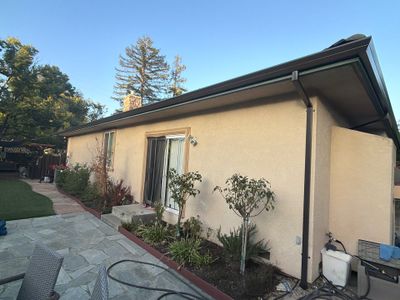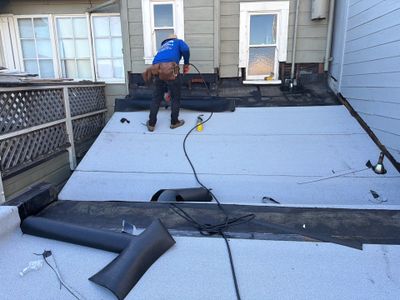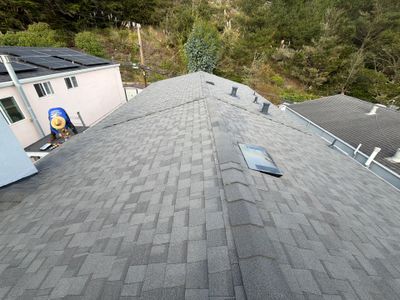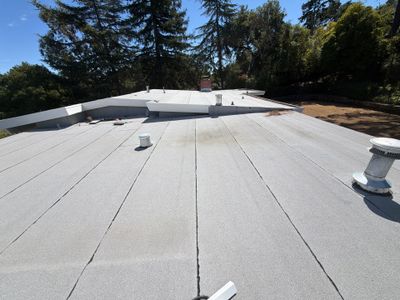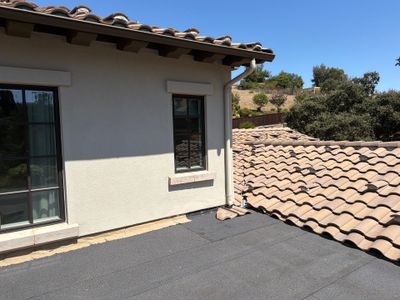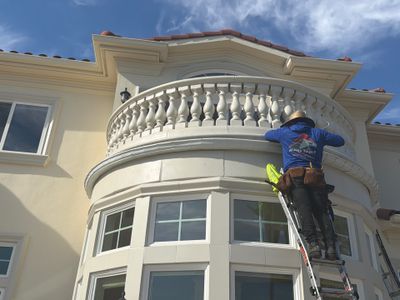
Roof replacement means removing the old roofing down to the deck, repairing the sheathing, and installing a complete new roof system with new underlayment, flashing and ventilation. Alpha Eagle Roofing replaces residential and small commercial roofs across the Bay Area, pulls the permit, and finishes with a city final inspection and a written warranty. We price every replacement from an on-roof inspection, in writing.
Roof replacement at a glance
- Scope
- Tear-off to the deck, sheathing repair, then new underlayment, flashing and ventilation
- Buildings
- Homes and small commercial buildings
- Time on the roof
- A few working days for most single-family homes; tile, steep and multi-story roofs take longer
- Permit
- Reroof permit pulled by us and closed out after the city final
- License
- CSLB #1148511, Class C-39 Roofing Contractor
Who this service is for
- Homeowners with an aging roof that leaks in more than one place or keeps needing repairs.
- Sellers and buyers who need a roof that passes inspection.
- Owners going solar who want a new roof under the panels first.
- Owners whose roof already has two layers, so the next roof must start with a tear-off.
Signs a repair will not be enough
Repeated leaks in different spots
When leaks move around the house, the underlayment is usually failing across the roof, not at one detail.
Shingles losing granules, curling or cracking
Bare spots and granules in the gutters mean the shingles are near the end of their service life.
Soft decking
Spongy areas underfoot or a sagging roofline mean water has reached the sheathing.
Cracked or slipping tile with worn underlayment
On tile roofs, the underlayment underneath often wears out first; replacing it means lifting the tile.
Moss, rot or curled shakes on an old wood roof
Common on shaded fog-belt slopes. Older shake roofs also raise fire-zone and insurance questions.
Repair costs that keep adding up
If you are paying for repairs every season, a replacement usually becomes the better use of the money. We will tell you honestly which side of that line your roof is on.
How a roof replacement works, start to finish
- Free inspection and written estimate Roof and attic inspection, measurements, deck and ventilation check, and an itemized written estimate.
- Choose the system Material, color and options, with the code items your property needs (Title 24, Class A, ventilation) built in.
- Permit and scheduling We pull the reroof permit and give you a written schedule, with weather in mind.
- Protect the property Tarps over plants, plywood against siding and windows, a dumpster or trailer placed where you agree.
- Tear-off Old roofing removed to the deck, one section at a time so the house is never left open.
- Deck inspection and repair We photograph and show you any rotted or damaged sheathing, then replace it under the terms written into your contract.
- Dry-in and flashing Drip edge, self-adhered membrane at valleys and penetrations, synthetic underlayment, and all-new flashing at walls, chimneys, skylights and pipes.
- Install the new roof Installed to the manufacturer's instructions, with ridge and eave ventilation balanced to the attic.
- Cleanup and magnet sweep Debris removed, gutters cleared, nails swept with a magnet from the driveway, walks and yard.
- Final inspection and handover City final inspection, walkthrough with you, photo record and warranty paperwork.
Tear-off or overlay?
Laying new shingles over old ones is cheaper on day one, and California code allows it only in limited cases. We recommend a full tear-off on nearly every job.
What the code allows
California's residential code does not allow a new roof covering over an existing roof that already has two or more layers, over wood shakes, slate or tile, or over a roof that is water-soaked or deteriorated.
Why we tear off
A tear-off lets us see and fix the deck, replace all flashing instead of reusing it, install modern underlayment, and keep the roof light. Many manufacturers also tie their best warranty coverage to installation over a clean, sound deck.
When an overlay can make sense
A single, flat-lying layer of shingles on a sound deck, on a budget-limited project, can be a legitimate option. We will explain the trade-off rather than make the choice for you.
What replacement day is like at home
You do not need to move out. It is loud, mostly on tear-off day.
Noise and access
Expect hammering and foot traffic overhead during working hours. Keep cars out of the driveway work zone and pets inside.
Attic dust
Some dust falls into the attic during tear-off. Cover anything stored up there.
Overnight
The roof is dried-in before the crew leaves each day, and the site is cleaned up and secured.
Solar panels
If you have solar, the panels have to come off and go back on. We coordinate the timing with your solar installer.
Choosing the replacement system
Shingle to shingle
Pros
- Most common and most cost-effective replacement
- Fastest to install
- Wide color range, including cool-rated colors
Cons
- Shorter life than tile or metal
- Older homes may need solid sheathing added over spaced boards
Tile reset or tile replacement
Pros
- Sound tile can often be lifted and reinstalled over new underlayment
- Keeps the look of the house
Cons
- Broken tiles and discontinued profiles need matching
- Labor-intensive, so it takes longer
Switching to metal
Pros
- Long service life, Class A assemblies, good under solar
- Light compared with tile
Cons
- Higher upfront cost
- Coastal homes need metal, finish and fasteners rated for salt air
Shake to shingle, tile or metal
Pros
- Removes a fire-zone and insurance concern
- Lower maintenance than wood
Cons
- Spaced boards under shakes need solid sheathing first
- Switching to tile needs a structural check
Fire zones, Title 24 cool-roof rules and coastal corrosion all affect which system is right; see new roof installation for how we specify each layer.
Thanks. Your request is in.
We will text you to confirm.
Active leak? Our 24/7 emergency line is (415) 410-7917. Call now and we will prioritize your request.
Call (415) 410-7917What affects the cost
Two roofs of the same size can be very different jobs, so every price comes from an inspection, in writing. Your estimate is built from these factors:
- Roof size, pitch, height and number of planes
- How many layers come off, and the existing material (tile and shake take longer to remove)
- Decking replacement found after tear-off
- New material system and any upgrade in fire rating or cool-roof product
- Access and staging on hillside and tightly built lots
- Flashing at chimneys, skylights and walls, and ventilation corrections
- Permit, inspections and disposal
- Optional work: gutters, fascia repair, skylight replacement, solar removal and reinstall
Timeline, permits and inspection
How long it takes
Most single-family replacements take a few working days on the roof once the permit is issued and materials are delivered. Tile, steep, multi-story and large roofs take longer, and so do jobs with significant deck repair. You get a written schedule before work starts and an update if weather changes it.
Permits and final inspection
Most Bay Area cities require a reroof permit. We pull it, schedule the inspections the city requires, meet the inspector, and close out the permit after final. You do not file anything yourself.
Warranty and photo documentation
Written warranty
Every job we do comes with a written workmanship warranty, and the roofing materials carry their own manufacturer warranty on top of that. The exact terms for your job are written into your contract before any work starts, so you know what is covered and for how long before you sign. See our warranty page for how our warranty works.
Every job photographed in CompanyCam
We document every job in CompanyCam: before photos, in-progress photos of the work that ends up hidden (decking, underlayment, flashing), and after photos. That photo record is useful long after we leave, for an insurance claim, a warranty question, or a buyer's inspector when you sell. We can share it with you on request. See finished work in our project gallery.
Your protections under California law
Check the license.
Roofing in California must be done by a contractor licensed by the Contractors State License Board. Ours is CSLB #1148511, Class C-39 (Roofing). You can look up any contractor at cslb.ca.gov.
The down payment is capped by law.
On a home improvement contract, a California contractor may not ask for a down payment of more than $1,000 or 10% of the contract price, whichever is less.
Payments should not get ahead of the work.
Progress payments are supposed to track work actually completed and materials delivered, not run ahead of them.
You have a right to cancel.
California home improvement contracts must include a written notice of your right to cancel, generally within three business days of signing (seniors get a longer window).
Everything in writing.
Scope, materials, schedule, payment schedule, and warranty belong in the written contract. We price every job from an inspection, in writing, so there is nothing to argue about later.
Frequently asked questions
Can you put a new roof over my old one?
Only in limited cases. California code does not allow a new roof over two or more existing layers, over wood shake, slate or tile, or over a deteriorated roof. Even where an overlay is allowed, we usually recommend a tear-off so the deck and flashing can be inspected and replaced.
How do I know if I need a replacement or just a repair?
Isolated damage on a roof with good life left is a repair. Leaks in several places, widespread granule loss, soft decking, or a roof near the end of its service life usually call for replacement. We inspect first and tell you which applies, with photos.
How long does a roof replacement take?
Most single-family replacements take a few working days on the roof after the permit is issued. Tile, steep, and large roofs take longer. You get a written schedule before we start.
Do I need to leave home during the replacement?
No. It is noisy, mostly on tear-off day, and some people choose to be out. The roof is dried-in and the site secured at the end of every working day.
What happens if you find rotted decking?
We photograph it and show you before replacing it. How deck repairs are priced is written into your contract up front, so there are no surprise line items.
How do you protect my yard and clean up?
We tarp landscaping, protect walls and windows, haul away all debris, clear the gutters, and run a magnetic sweep for nails across the driveway, walkways and yard.
Do you handle the permit?
Yes. We pull the reroof permit, schedule and meet the inspector, and close the permit after final inspection.
Can I finance a roof replacement?
Yes. Financing is available for qualified homeowners through a third-party lender, and the lender sets the terms. See our financing page or ask during your free inspection.
How do I choose a roofing company near me for a replacement?
Pick a local company with a CSLB C-39 roofing license, insurance certificates it will show you, the permit pulled in its name, and an itemized written estimate you can compare line by line against other bids. Our guide to comparing roofing quotes shows what to look for, and our city pages, such as roof replacement in Oakland, cover local permits and conditions.